ABOUT RAW MODUS
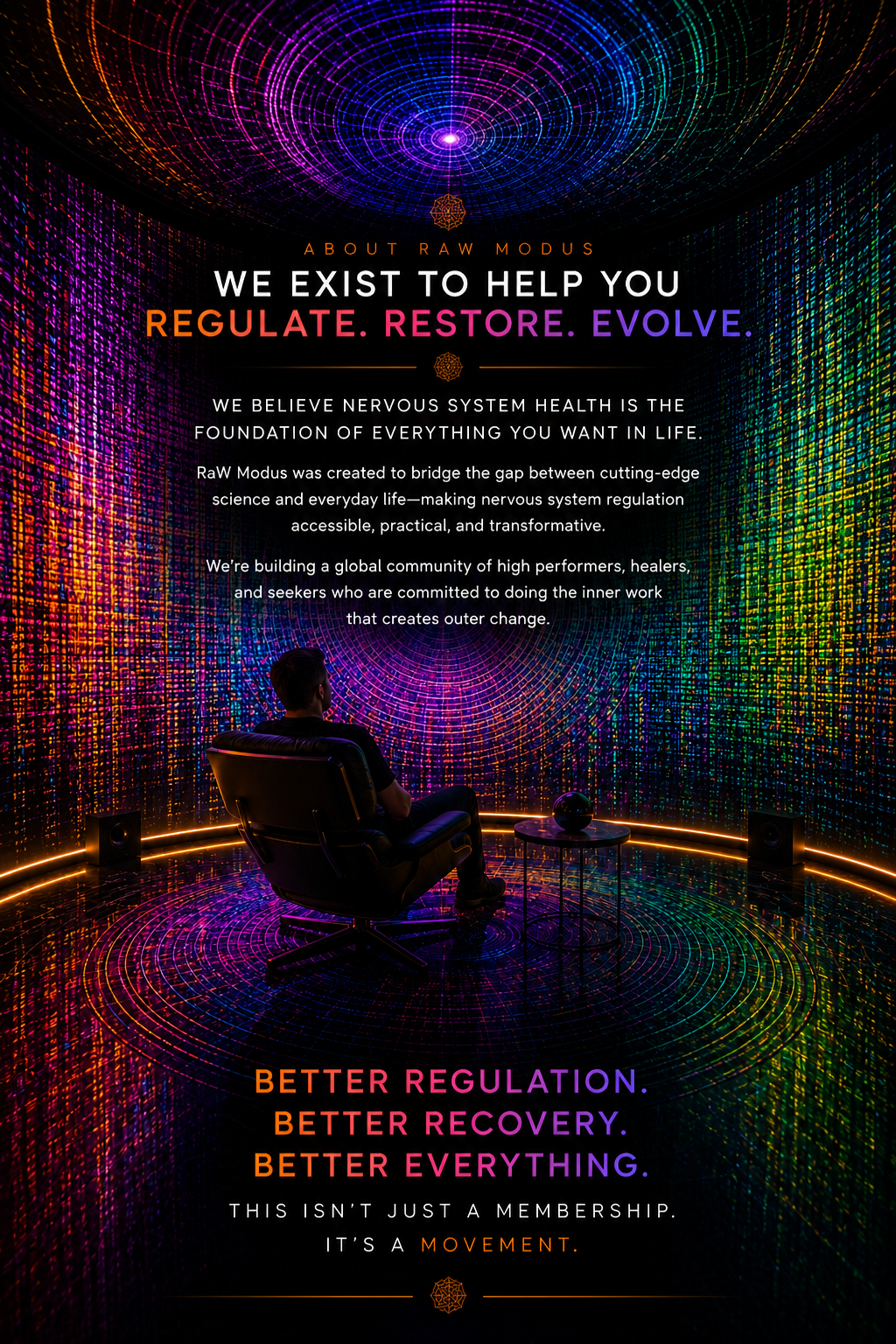
RaW Modus is a structured visual environment platform designed to operate as continuous visual architecture within built spaces.
Unlike traditional screens that display media, RaW Modus organizes visual space through synchronized geometric motion across multiple displays, forming a continuous environmental visual field within the room.
The system operates as a multi-layer visual field system rather than a single display. Each layer contributes to the overall visual structure of the environment, creating a unified spatial field that remains active over time.
RaW Modus environments are typically installed in residential studios, creative workspaces, and dedicated observation rooms where the visual system can operate continuously as part of the surrounding space.
Learn more about the Platform Architecture.
PLATFORM EXPLANATION
The RaW Modus system operates as a synchronized visual environment composed of multiple coordinated layers.
These layers function together to form a continuous environmental visual field:
• peripheral engagement field
• central geometric anchor
• continuous motion architecture
• non-narrative spatial modulation
Unlike conventional digital displays that present narrative content, RaW Modus environments maintain a continuous structural visual field that organizes visual space rather than presenting media.
This configuration allows the environment to function as a persistent architectural element within the room rather than as a device or screen.
Learn how the system operates in the RaW Modus Platform.
VISUAL ARCHITECTURE
RaW Modus operates within the emerging category of visual environmental architecture, where visual systems function as environmental layers embedded within built space.
In this framework, synchronized visual structures act similarly to lighting, acoustic design, or spatial geometry—elements that influence how environments are perceived and experienced.
The system organizes motion, geometry, and spatial rhythm across multiple displays so that the environment operates as a unified visual field rather than independent screens.
This architectural approach distinguishes RaW Modus from traditional media environments, immersive entertainment systems, or virtual reality technologies.
Instead, RaW Modus environments operate continuously as part of the spatial architecture of the room.
Explore how these environments function in RaW Environments.
STUDIO CONTEXT
The RaW Studio environment allows visitors to observe and experience the system operating within a controlled installation.
In-office sessions provide an opportunity to sit within the visual environment while the system operates continuously around the observer.
There are no instructions or interaction required.
Participants simply observe the environment and notice how the visual field organizes the surrounding space over time.
Studio sessions are typically offered in:
• 30-minute sessions
• 60-minute sessions
Sessions provide a structured introduction to the system before individuals explore broader architectural installation possibilities.
Learn more about Experience RaW In Office.
RESEARCH LINEAGE
RaW Modus originates from the research framework developed within RaW Energy Systems, an independent research initiative focused on the architectural classification of visual environments in built spaces.
This work explores how synchronized visual systems can function as continuous environmental layers rather than traditional media displays.
Within this framework, visual systems are studied as spatial infrastructure operating across multiple visual layers to form coherent environmental fields.
The RaW Modus platform represents the residential and studio implementation of these architectural principles.
Those interested in the research framework and theoretical foundation behind the system can explore the research archive at RaW Energy Systems.
RaW Modus is the studio and experiential implementation of the RaW Energy Systems research platform.